
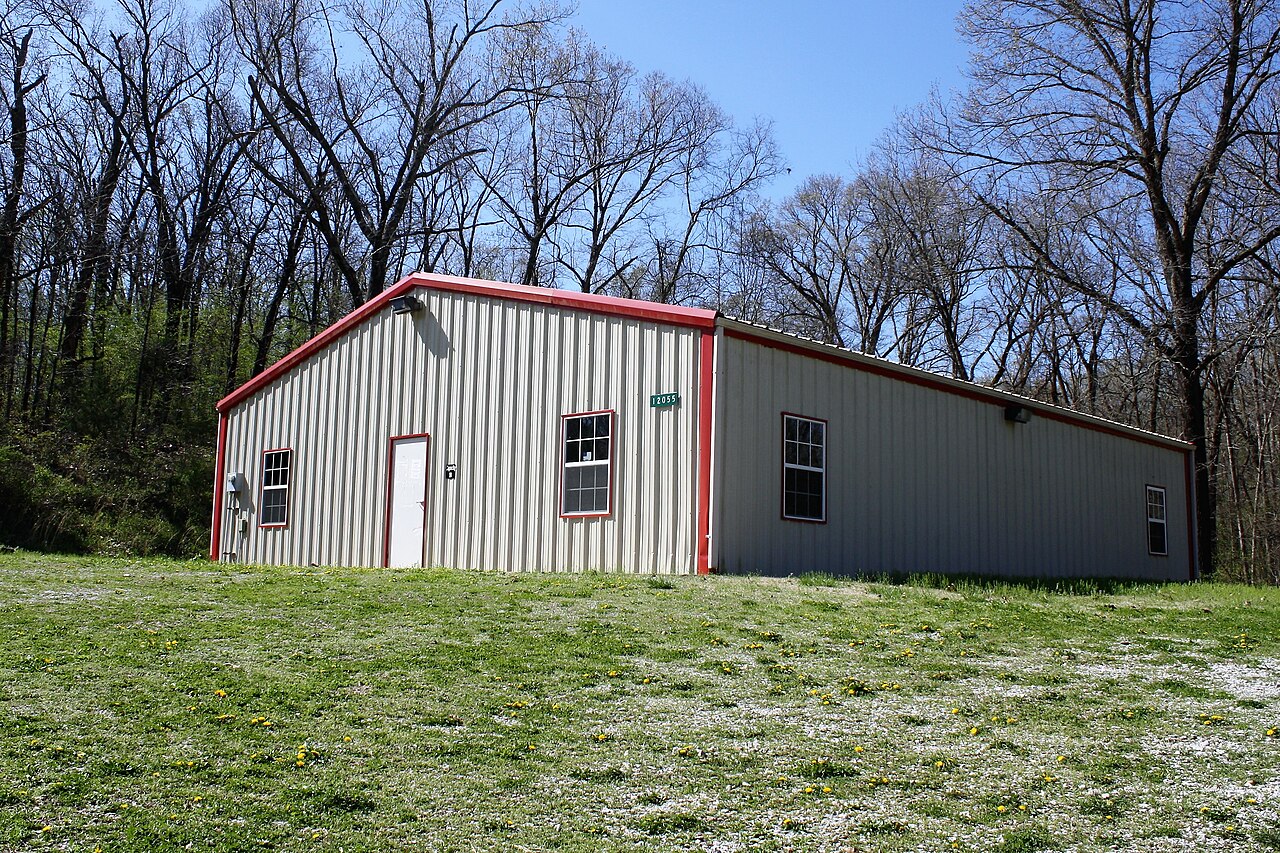
Arkansas is one of the cheapest states in the country to put up a steel building, and one of the freest.
Most Arkansas counties have no building department at all. County government simply isn't given building code authority the way it is in most states — county planning boards are limited to zoning, subdivision, setback and entry control. Cities issue permits; outside them, in much of the state, nobody does.
Compare Prices & Save
Most kits run $16–$20 per sq ft. Your real number depends on size, location, foundation & finish. Takes two minutes to find out.
14,068 kits sold 50-year Structural Warranty
And there's a second thing, which matters more than the first if you're building a home. Arkansas law forbids counties and cities from regulating what your building is made of or how big it has to be. No minimum square footage. No banning metal siding. That's written into statute, and it removes the single most common obstacle to a metal home in the rest of the country.
This page covers what a building costs in Arkansas, who actually issues permits, that cladding and square-footage protection and its one real exception, and what a metal home kit involves here.
What a Metal Building Costs in Arkansas

Steel ships at essentially one national price. What changes by state is concrete and erection labor — and Arkansas runs about 20% below the national average on that site-built portion, tied for the lowest in the country.
| Size | Sq ft | Kit only | Turnkey in Arkansas | Turnkey national avg |
|---|---|---|---|---|
| 30x40 | 1,200 | $21,000 – $24,700 | $27,800 – $32,700 | $29,500 – $34,700 |
| 40x60 | 2,400 | $39,400 – $46,300 | $53,500 – $62,800 | $57,000 – $66,900 |
| 50x100 | 5,000 | $76,400 – $89,700 | $106,600 – $125,200 | $114,200 – $134,100 |
| 60x120 | 7,200 | $105,900 – $124,400 | $150,100 – $176,200 | $161,200 – $189,200 |
Kit-only covers the delivered steel structure — frame, roof and wall panels, doors, and engineering stamped for your jurisdiction. Turnkey adds the concrete foundation and professional erection.
Kit-only pricing does not drop in Arkansas. The steel is fabricated and shipped at a national rate; the saving is in the slab and the crew. On a 60x120 that's roughly $11,100 below the national average — real money, and all of it in site work.
Three things hold that number down and they're all structural: an energy code still based on the 2009 IECC, no permit or inspection overhead across most of the state, and a $50,000 commercial contractor licensing floor that lets smaller shop and garage jobs be built without a licensed general contractor.
Get A Quote For Your Exact Dimensions
Do You Need a Permit in Arkansas?
Inside a city, yes. Outside one, usually not — and the reason is structural rather than a matter of local preference.
Counties largely aren't given the authority
Arkansas law limits county planning boards to zoning, subdivision, setback and entry control ordinances. Building codes are not in that list. So most Arkansas counties have no building department, no plan review and no inspection process for an unincorporated parcel.
A few of the more populous counties do run inspection departments. Even there, the trend runs toward less rather than more: Benton County enforces the state code but as of late 2023 no longer requires building permits for Group U structures in unincorporated areas — detached shops with no living space, carports and storage buildings.
Call the county anyway. "Most counties don't" is not "yours doesn't," and the answer takes one phone call.
Cities issue permits, and they can't rewrite the code
Inside city limits you're in a normal permitting process. But Arkansas does something unusual with the code itself: state law directs that each district, county, municipality or other political subdivision shall only adopt and enforce the provisions of the Arkansas Fire Prevention Code.
Local amendment isn't permitted. That's genuinely useful for a pre-engineered building — the code your drawings have to satisfy in Fayetteville is the code they have to satisfy in Pine Bluff. It removes a class of surprise that exists in Georgia, Alabama and Tennessee.
On agricultural exemptions
Many states have a statutory agricultural building exemption. We could not verify one in Arkansas statute, and we won't publish one that isn't there.
In practice the question rarely comes up, because in most of rural Arkansas there's no permit requirement to be exempt from. If you're inside a city, or in one of the counties that does inspect, ask directly rather than assuming an exemption exists.
Counties Can't Regulate What Your Building Is Made Of
This is the Arkansas provision that matters most, and almost nobody building a metal home knows about it.
Arkansas law prohibits counties from regulating, for a single-family home:
- Exterior building color
- The type or style of exterior cladding material
- Roof style, material or pitch
- Exterior ornamentation
- Window and door placement and style, including garage doors
- Interior room configuration
- Minimum square footage
A parallel provision applies the same ban to municipalities.
Counties may still regulate height, bulk, orientation and location on the lot — the things zoning is actually for.
What this means in practice. In most states, the two things that kill a metal home are a minimum-square-footage rule and an exterior materials ordinance requiring brick or siding. In Arkansas, neither is available to a county or a city.
The exception that actually matters
The statute preserves a specific list, and one item on it does the real damage:
- Historic districts and landmarks
- Private covenants and deed restrictions
- Building and safety code requirements
- Manufactured housing
- NFIP flood conditions
- Business improvement districts, multifamily and overlay districts
- Regulations that predate February 28, 2019
Private covenants are expressly preserved. So in Arkansas it is not the county that stops a metal home — it's the subdivision. Read the deed restrictions on any parcel before you buy it, because that document has authority the county no longer does.
Arkansas Building Codes
Arkansas adopts codes through the State Fire Marshal, under the Division of Arkansas State Police.
| Code | Basis | Effective |
|---|---|---|
| Arkansas Fire Prevention Code Vol. I | 2021 IFC | January 1, 2023 |
| Arkansas Fire Prevention Code Vol. II | 2021 IBC | January 1, 2023 |
| Arkansas Fire Prevention Code Vol. III | 2021 IRC | January 1, 2023 |
| Arkansas Energy Code | 2009 IECC | January 1, 2015 |
The energy code is the outlier, and it's in your favor. Arkansas's energy standard is still the 2014 Arkansas Energy Code, based on the 2009 IECC — roughly fifteen years behind the structural codes sitting alongside it. For a conditioned metal building that's a real and quantifiable cost advantage over neighboring states. A 2021 IECC-based update has been drafted but we could not verify that it has been adopted, so treat 2009 as current and confirm if it matters to your budget.
Every kit we ship includes drawings stamped for the jurisdiction you're building in, sized to that location's loads.
Wind, Seismic and Snow
Arkansas publishes no statewide wind speed map or county table. The 2021 codes reference ASCE 7-16, and the climatic criteria table is left for each authority having jurisdiction to fill in.
Little Rock's published design criteria give a sense of the interior of the state: Risk Category II at 115 mph, ground snow load 10 psf, frost depth 12 inches. Those are that city's figures under the code edition in force when they were published, not a statewide standard.
Get your site's numbers from the jurisdiction, or use the ASCE 7 Hazard Tool, which returns wind, snow and seismic values for an exact latitude and longitude, free. It takes a minute and it's what your engineer will use.
Northeast Arkansas is a seismic zone
This surprises people. Arkansas sits within the influence of the New Madrid seismic zone, and the state publishes statutory seismic zones — though the statute applies them to public structures rather than to private buildings.
Zone 3, the greatest anticipated damage, covers Clay, Greene, Craighead, Mississippi, Poinsett, Cross, Crittenden, St. Francis, Randolph, Lawrence, Jackson, Woodruff and Lee counties. Zone 2 covers Sharp, Independence, White, Lonoke, Prairie, Arkansas, Monroe, Phillips, Fulton, Izard, Stone and Cleburne. Everything else is Zone 1.
For a private building the Seismic Design Category still has to be determined site by site, and we won't publish one we can't verify. But if you're building in the northeast quadrant, make sure your engineering package addresses seismic and not just wind. Base plates, anchor bolts and bracing are where it lands, and they're fabricated before anyone inspects them.
Tornadoes
Arkansas has significant tornado exposure, and the honest answer matters more than a reassuring one. No code-compliant building of any material is tornado-rated. Buildings are engineered for straight-line wind.
Arkansas has no statewide storm shelter mandate for homes — the code carries only the standard requirement for larger schools. Tornado protection comes from a separate shelter built to the ICC 500 standard, which is a different structure from the building around it.
What engineered steel and proper anchorage genuinely buy you is performance in the far more common events: straight-line wind, hail and severe thunderstorm.
Contractor Licensing in Arkansas
Two very different thresholds, and the residential one is among the lowest in the country.
| Work | License required at |
|---|---|
| Commercial | $50,000 or more, including labor and materials |
| Residential — new single-family | Over $2,000 |
Residential remodeler, home improvement, subcontractor registration and 90-day temporary licenses exist as separate categories. A "single family residence" means one to four units of new residential construction.
Read those two numbers together, because the gap is the whole story. A 40x60 shop built as a commercial or accessory structure sits well under the commercial threshold and can be built without a licensed general contractor. The same building as a dwelling needs a licensed residential builder at essentially any size. $2,000 is not a threshold that anything clears.
Projects may not be split to evade the commercial threshold, and an owner building on his own property is exempt from the commercial requirement.
For a kit-direct shop, this makes Arkansas about as straightforward as it gets — buy the building at wholesale and contract the slab and the erector directly, which is usually the lower total cost. Confirm your erector has done a clear span at your building's width, and that they carry liability and workers' compensation coverage, because in a state with this little licensing friction your own diligence is the safety net.
Climate, Soil and Foundations
Get a soils assessment before you budget the foundation. Arkansas spans the Ozarks, the Arkansas River Valley and the Delta, and those are three genuinely different foundation environments. We could not find an Arkansas agency source mapping expansive soils at a resolution that would let anyone recommend a slab design from a web page — which is exactly why the answer is a geotechnical report rather than an assumed bearing value. This is the line item most likely to surprise you.
Frost depth runs shallow. Little Rock publishes 12 inches; confirm locally, since there's no statewide figure.
Humidity is the design problem across most of the state. A vapor barrier under the slab and adequate ventilation prevent the condensation that ruins stored equipment. Insulation earns its cost quickly in Arkansas summers, and it does more for operating cost than the energy code requires of you.
Snow load is light — around 10 psf in the center of the state, rising modestly in the Ozarks.
See foundation options and insulation options.
Metal Home Kits and Barndominiums in Arkansas

Arkansas is one of the best states in the country to build a metal home, and the reason is the cladding and square-footage protection above. Two things to get right.
A licensed residential builder is required at $2,000
That's the one real constraint. Whatever the county does or doesn't require in the way of permits, a new single-family residence over $2,000 needs an Arkansas licensed residential builder. There is no practical project below that number.
Owner-builders should check the exemption carefully with the Contractors Licensing Board rather than assuming the commercial owner exemption carries across — the residential rules are a separate subchapter.
The covenant is what stops you, not the county
Repeating it because it's the whole game in Arkansas: counties and cities cannot impose a minimum square footage or ban metal cladding on a single-family home. Private deed restrictions can, and they're expressly preserved by the statute.
Read the covenants before you buy the land. That is the checkable, five-minute step that decides whether the project happens.
A kit is site-built, not modular — and that distinction matters
A steel shell erected on your site is site-built construction under the residential code, exactly like a stick-framed house.
That's different from a factory-built modular home, which is produced under a separate regime: the manufacturer must be certified with the Arkansas Manufactured Home Commission before shipping into the state, and the unit has to meet the Fire Prevention Code plus state and municipal electrical, plumbing and mechanical codes. Different again from a HUD-code manufactured home.
If a seller is vague about which of the three you're buying, that's the question to press. It changes the code path, the licensing, the financing and the appraisal.
A house is a different code from a shop
Once anyone sleeps in the building the residential code governs. Three things change about the kit, all cheap to specify up front and expensive to retrofit:
- The building envelope becomes code-driven. Arkansas's energy bar is low, but in this humidity insulation is also the moisture control strategy regardless of what's required.
- Window and door openings have to be engineered into the frame. Cutting them into erected steel means re-engineering and added framing.
- Interior walls hang off the structure rather than holding it up, which is what makes an open barndominium layout possible and lets you move a wall later without touching the load path.
Tell your supplier it's a residence before the frame is engineered, not after the steel arrives — and if you're in the northeast counties, tell them about seismic too.
What the shell costs, and what it doesn't
The turnkey figures earlier are for the shell — engineered steel structure, erected, on a foundation. For a 2,400 sq ft 40x60 in Arkansas that's roughly $53,500 – $62,800.
Interior finish-out is a separate project and, for a finished home, it typically costs more than the shell does. Plumbing, electrical, HVAC, insulation and drywall, kitchen, bathrooms, flooring and fixtures are driven by the finish level you choose, not by the building — which is why anyone quoting a single all-in per-square-foot number for a barndominium is guessing.
Price the shell from a kit quote and the finish-out from local trades. Those are two reliable numbers; one blended number is not.
See metal homes, barndominium kits, and shop houses for more residential housing info.
Popular Uses in Arkansas
Farm and equipment storage, poultry houses, workshops, barn homes, RV garages, riding arenas, light industrial and warehouse space along I-40 and I-30, and storage units.
The 40x80 is the most requested size in Arkansas — see 40x80 kit pricing or browse all sizes.
Frequently Asked Questions
Do I need a permit for a metal building in Arkansas?
Inside a city, yes. Outside one, usually not — Arkansas county planning boards are limited by statute to zoning, subdivision, setback and entry control, and building codes are not on that list, so most counties have no building department. A few populous counties do inspect, and even Benton County dropped permits for detached shops and storage buildings in unincorporated areas in late 2023. Call your county to be sure.
How much does a metal building cost in Arkansas?
Kit-only runs $21,000–$24,700 for a 30x40 and $39,400–$46,300 for a 40x60. Turnkey runs about 20% below the national average on the site-built portion — roughly $53,500–$62,800 for a 40x60 installed, tied for the lowest in the country. The kit itself costs the same as anywhere; steel ships at a national price.
Can my county require a minimum square footage or ban metal siding?
No. Arkansas law prohibits counties and cities from regulating exterior cladding material, roof style and material, exterior color and ornamentation, window and door placement, interior room configuration, and minimum square footage on a single-family home. They may still regulate height, bulk, orientation and location on the lot.
So nothing can stop me building a metal home?
One thing can: private deed restrictions. The statute expressly preserves covenants, along with historic districts, manufactured housing rules, flood conditions and regulations predating February 28, 2019. In Arkansas it's the subdivision, not the county, that blocks a metal home — so read the covenants before you buy the land.
Do I need a licensed contractor in Arkansas?
It depends entirely on what you're building. Commercial work needs a license at $50,000 or more. A new single-family residence needs a licensed residential builder at over $2,000 — a threshold nothing realistic falls below. So a metal shop can often be built without a licensed GC while the same building as a home cannot.
Which building code applies?
The 2021 Arkansas Fire Prevention Code — 2021 IBC for commercial, 2021 IRC for residential — effective January 1, 2023. The energy code is separate and much older: still based on the 2009 IECC. Usefully, local governments may adopt and enforce the state code but may not amend it, so the requirements don't shift between jurisdictions.
What wind speed does my building need to be engineered for?
Arkansas publishes no statewide map — the criteria table is filled in by each jurisdiction. Little Rock publishes Risk Category II at 115 mph with 10 psf ground snow and 12 inch frost depth as an interior-Arkansas reference point. Get your own site's figures from the jurisdiction or the ASCE 7 Hazard Tool, since frames are fabricated to that number and can't be upgraded on site.
Do I need to worry about earthquakes in Arkansas?
In the northeast, yes. Arkansas sits within the New Madrid seismic zone's influence and the state publishes statutory seismic zones — Zone 3 covers thirteen northeastern counties including Craighead, Mississippi, Crittenden and Poinsett. Those statutory zones apply to public structures, so for a private building the design category has to be determined site by site. Make sure your engineering addresses seismic, not just wind.
Is a metal building safe in a tornado?
No code-compliant building of any material is tornado-rated, in Arkansas or anywhere else — buildings are engineered for straight-line wind. Arkansas has no statewide residential storm shelter requirement. Tornado protection comes from a separate ICC 500 shelter. What engineered steel and proper anchorage do buy you is real performance in straight-line wind and hail, which are far more common.
How long does it take to build?
Kit fabrication and delivery typically run 6–12 weeks after engineering approval, with erection a few weeks more depending on size. In a county with no building department that's the whole timeline. Inside a city, add the permitting process before anything is fabricated.
Get an Arkansas Quote
Tell us your dimensions, eave height and county, and we'll come back with wholesale pricing on a kit engineered for your site's actual wind speed — free, and no obligation.
Get your free quote · Metal buildings by state
Code editions, design criteria and permitting requirements change, and local adoption varies by county and city. Verify current requirements with your authority having jurisdiction before finalizing a design. Last reviewed August 2026.
Get Your Free Quote
Answer a few quick questions and we'll match you with suppliers who quote your exact size and location. Takes about two minutes.
14,068 kits sold • 50-year structural warranty • Free, no obligation
