
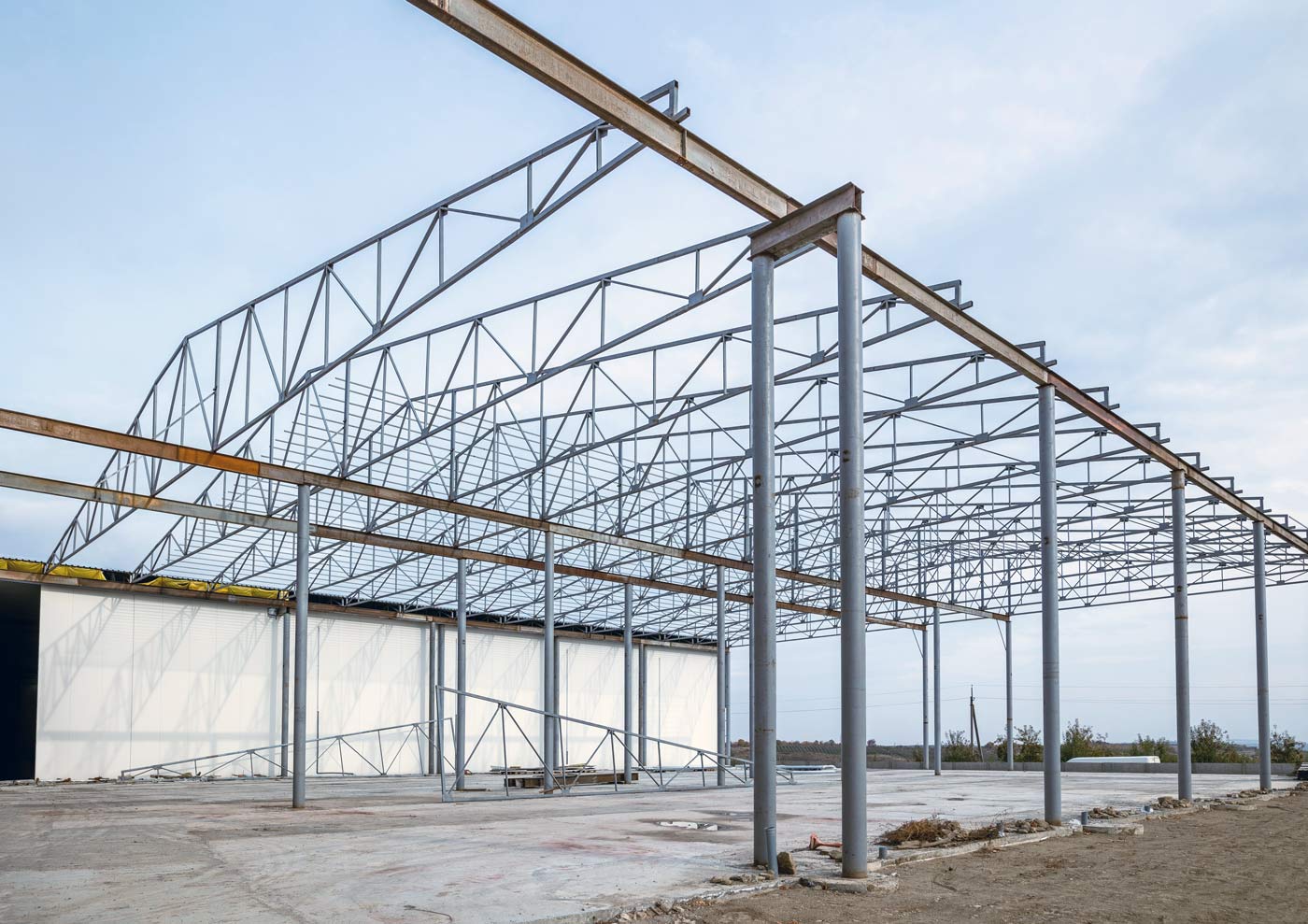
There’s one thing about building in Georgia that almost nobody explains properly, and getting it wrong is expensive in a way that only shows up years later.
Georgia’s building codes apply to your building everywhere in the state. The permit and the inspection might not exist where you’re building.
Compare Prices & Save
Most kits run $16–$20 per sq ft. Your real number depends on size, location, foundation & finish. Takes two minutes to find out.
14,068 kits sold 50-year Structural Warranty
Those are two separate questions in Georgia, and the state is unusually explicit about it. The Department of Community Affairs puts it plainly: any structure built in Georgia must comply with the state minimum codes, whether or not the local government chooses to locally enforce these codes. Enforcement is a local choice. Compliance is not.
So “the county doesn’t require a permit” is a true and useful fact about your paperwork. It is not a statement about what your building has to be built to. Read it as the second thing and you can end up with a structure that’s difficult to insure, difficult to finance and difficult to sell.
This page covers what a building costs in Georgia, how that compliance-versus-enforcement split works in practice, the codes that changed on January 1, 2026, and the agricultural exemption that is far narrower than its reputation.
What a Metal Building Costs in Georgia
Steel ships at essentially one national price. What changes by state is concrete and erection labor — and Georgia runs about 12% below the national average on that site-built portion.
| Size | Sq ft | Kit only | Turnkey in Georgia | Turnkey national avg |
|---|---|---|---|---|
| 30×40 | 1,200 | $21,000 – $24,700 | $28,500 – $33,500 | $29,500 – $34,700 |
| 40×60 | 2,400 | $39,400 – $46,300 | $54,900 – $64,400 | $57,000 – $66,900 |
| 50×100 | 5,000 | $76,400 – $89,700 | $109,700 – $128,800 | $114,200 – $134,100 |
| 60×120 | 7,200 | $105,900 – $124,400 | $154,600 – $181,400 | $161,200 – $189,200 |
Kit-only covers the delivered steel structure — frame, roof and wall panels, doors, and engineering stamped for your jurisdiction. Turnkey adds the concrete foundation and professional erection.
Kit-only pricing does not drop in Georgia. The steel is fabricated and shipped at a national rate; the saving is in the slab and the crew. On a 60×120 that’s roughly $6,600 below the national average, all of it in site work.
Price Your Own Kit · See more sizes
Do You Need a Permit in Georgia?
Permits come from your city or county. There is no state building permit and no state permit threshold — and that second point is more unusual than it sounds.
When Georgia adopted the International Building Code, it deleted Chapter 1 entirely — the chapter covering scope and administration. It remains in the code only as a reference and guide for local governments writing their own procedures. The practical effect: what triggers a permit, what size building is exempt, what the fees are, what has to be submitted and when inspections happen are 100% local. There is no statewide baseline for any of it.
That means any claim you read online along the lines of “buildings under X square feet don’t need a permit in Georgia” is false as a statewide statement. It may be true in one county and wrong in the next one over.
Enforcement is optional. Compliance isn’t.
O.C.G.A. § 8-2-26 is written entirely in permissive language: a local governing body shall have the power to adopt enforcement provisions, to inspect, to employ inspectors, and to require permits and to fix charges therefor. Nothing in it compels a county to do any of those things, and the state does not require local governments to adopt the mandatory codes for local enforcement.
So enforcement varies. Some Georgia jurisdictions enforce all eight mandatory codes with full plan review. Some enforce only a few. Some have very little in the way of an inspection department at all.
None of that changes what the building has to be. The 2024 IBC or IRC with Georgia amendments, the state energy code and the 2023 NEC apply to your structure as a matter of state law regardless of who checks.
Why this matters years later
A building erected without a permit still has to be code-compliant. The gap surfaces when someone finally looks:
- Insurance underwriting, and more sharply at a wind or hail claim
- Appraisal and financing, on the property or on a refinance
- Resale disclosure
- A change of use, or a later addition that does require a permit
- Liability, if the structure fails
The move that protects you costs almost nothing at order stage: buy engineered, sealed drawings for your site’s actual design loads whether or not the county asks to see them. In a jurisdiction that doesn’t inspect, that engineering package is the only evidence you’ll ever have that the building was built right.


Recommend Builders In Georgia
BN Buildings
770-A County Line-Auburn Rd
Winder, GA 30680
(470) 410-2050
BN Buildings are our top choice for affordable, super-durable, and highly customizable top-quality steel buildings. They have solutions for any garages, storage buildings, commercial, industrial, retail, farm or agricultural buildings, carports, etc…
They are now our preferred vendor for all pre-engineered metal buildings in the US. We are able to offer our customers the best prices with nationwide delivery.
Let Ben know you heard about BN Buildings from Ian with MetalBuildings.org for exclusive discounts on all steel kits.
Georgia Building Codes: What Changed January 1, 2026
Georgia adopts state minimum standard codes under O.C.G.A. § 8-2-23, and they moved forward substantially at the start of this year.
| Code | Edition now in force |
|---|---|
| International Building Code | 2024, with 2026 Georgia Amendments |
| International Residential Code | 2024, with 2026 Georgia Amendments |
| International Energy Conservation Code | 2015, with Georgia amendments |
| Plumbing / Mechanical / Fuel Gas | 2024, with 2026 Georgia Amendments |
| National Electrical Code | 2023, with 2026 Georgia Amendments |
The energy code is the one to get right. Georgia moved its structural and mechanical codes to the 2024 editions but has never moved off the 2015 IECC, layering several rounds of state amendments on top instead. Anyone telling you a building meets “Georgia’s 2024 energy code” is describing something that doesn’t exist.
Georgia’s amendments also change the base code in ways that matter for an engineered building, including a Georgia-specific figure replacing one of the national wind coefficient charts. Your manufacturer’s engineer needs to be working from the Georgia amendment packet, not the base IBC.
Every kit we ship includes drawings stamped for the jurisdiction you’re building in, sized to that location’s loads.
Popular Steel Building Sizes
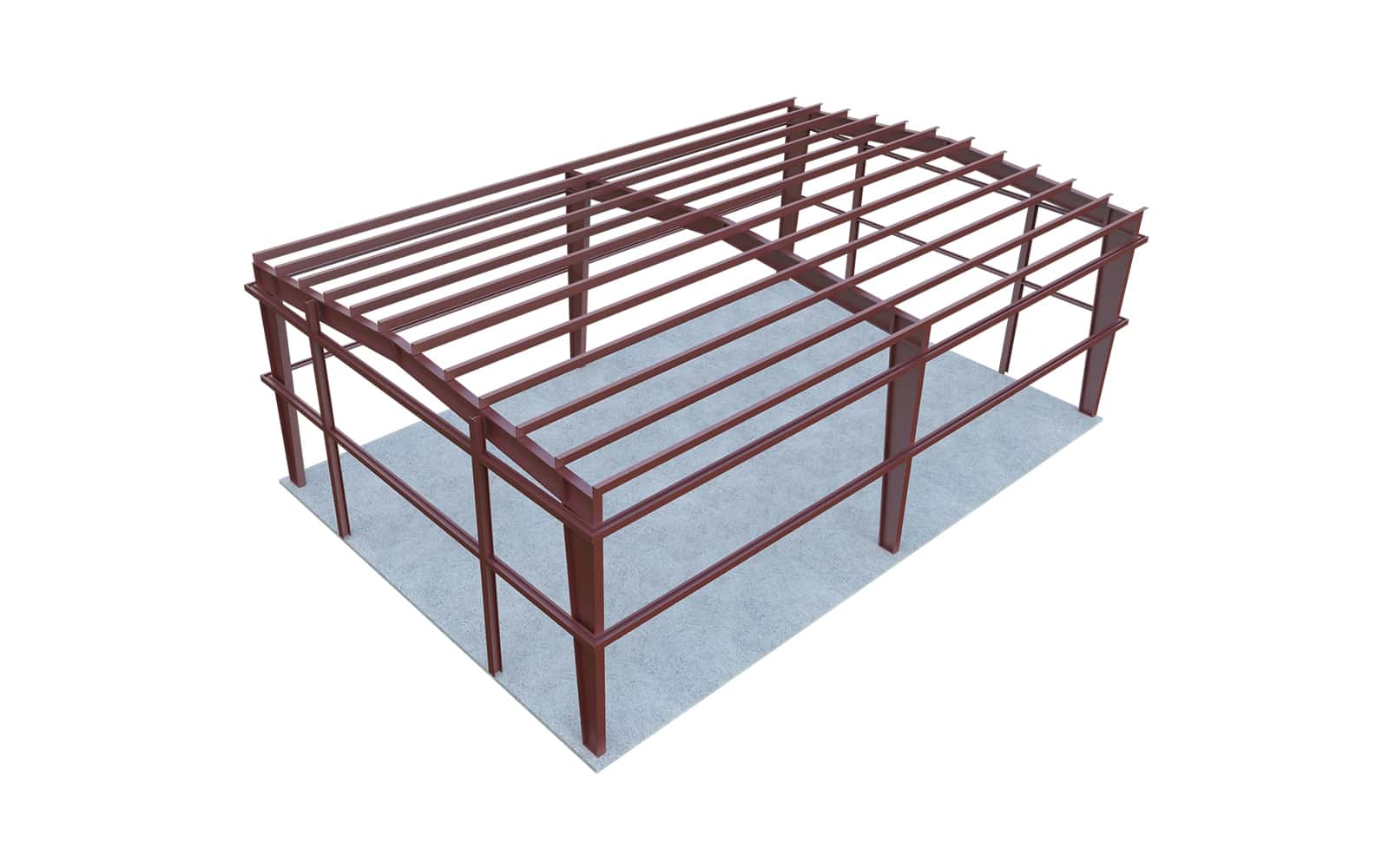
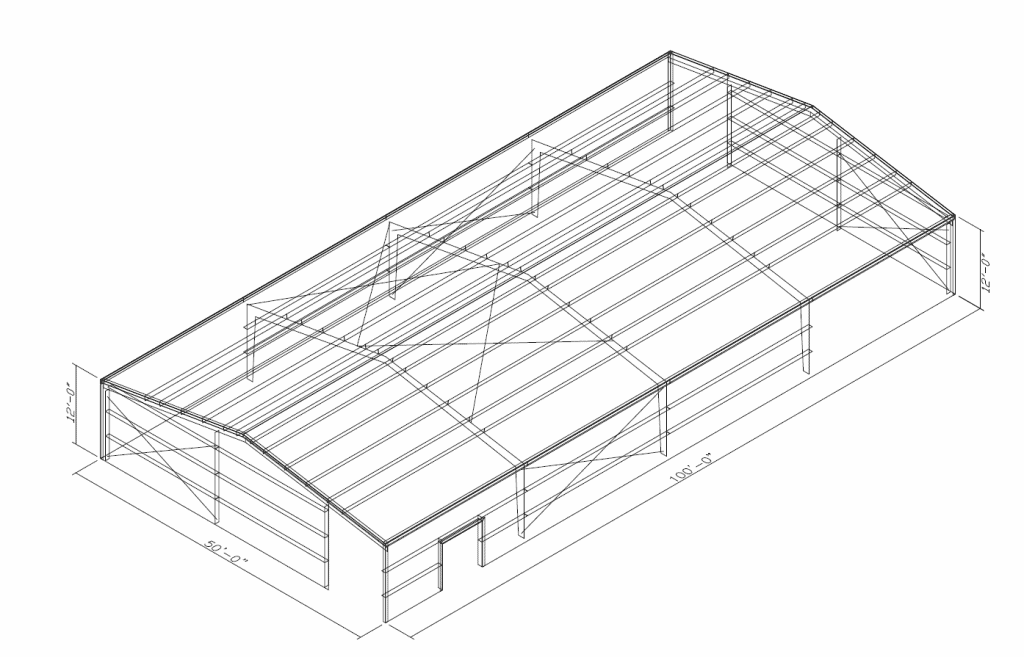

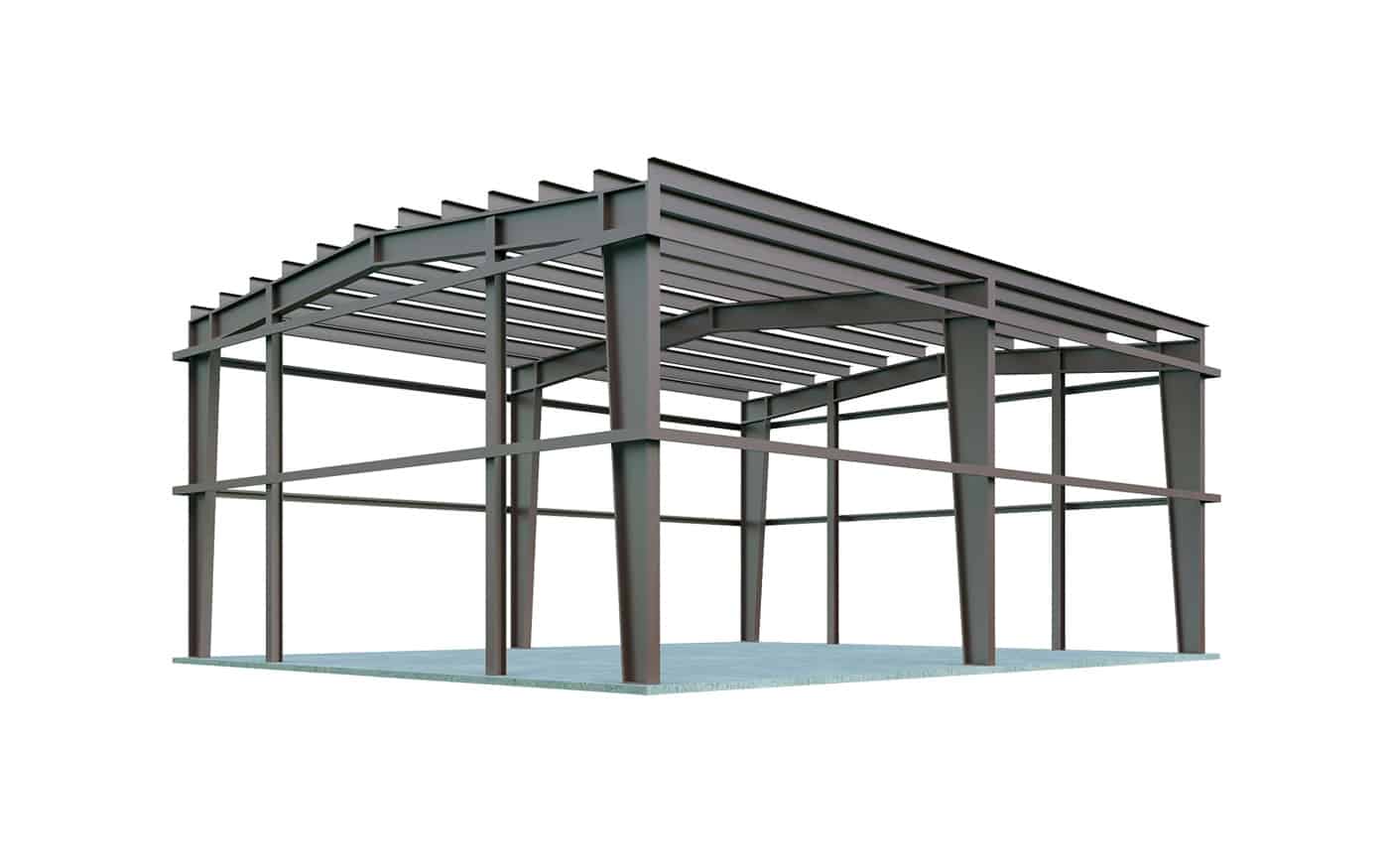
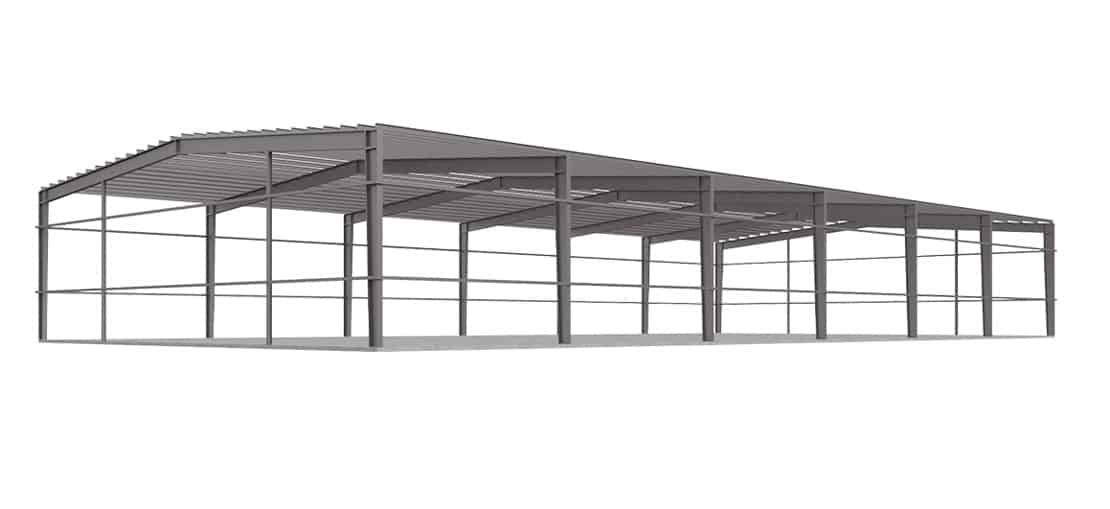

Or estimate your steel building cost for any custom size, including foundation and state-by-state labor.
Wind Load: Georgia Publishes No Map
Georgia’s code references ASCE 7-22, and the state adopted no wind speed map and no county wind speed table of its own. Design wind speed comes from ASCE 7-22 by geographic coordinates.
There is no Georgia number, and any page that gives you one is making it up.
Two things follow. ASCE 7-22 rebuilt the wind maps and changed values in many regions from the previous edition — so a wind speed quoted from an older article, or from a supplier working off the last code cycle, may now be wrong for your site. And the range across Georgia is genuinely wide, from the hurricane-exposed coast at Savannah and Brunswick to the north Georgia mountains.
Get the design wind speed and exposure category from the building official who will review your plans. Where no one will give you a number, the ASCE 7 Hazard Tool returns wind, snow and seismic values for an exact latitude and longitude, free. It takes about a minute and it’s the figure a competent engineer will use anyway.
Wind speed drives frame weight directly. When comparing quotes, confirm every one was engineered to the same speed — otherwise you’re comparing different buildings and the cheapest is simply the lightest.
One correction while we’re here. ASCE 7-22 introduced tornado load provisions, and they apply to Risk Category III and IV structures — schools, large assembly buildings, emergency response facilities. An ordinary shop, warehouse, barn or barndominium is Risk Category II and is not covered. No code-compliant building of any material is tornado-rated.
The Agricultural Exemption Is Much Narrower Than You Think
This one costs people real money because the reputation and the statute are so far apart.
Georgia’s agricultural exemption from the building codes, O.C.G.A. § 8-2-25(e), applies only to a farm building that is:
- On a farm, and
- Designed by the USDA Natural Resources Conservation Service, and
- Not used for residential purposes or primarily for public use, and
- Used for manure storage, animal mortality composting, or winter feeding
That’s the entire state exemption. A general-purpose pole barn, equipment shed, hay barn or farm shop is not covered by it.
If someone tells you Georgia has a broad agricultural building exemption, they’re describing a local ordinance — which may well exist in that county, and which does not travel across the county line to yours.
There’s a second, separate exemption people conflate with it. O.C.G.A. § 43-41-17(k) exempts agricultural-occupancy and agricultural-storage buildings from contractor licensing. Different statute, different subject. Being exempt from needing a licensed contractor is not the same as being exempt from the building code, and the two get mixed up constantly.
Contractor Licensing in Georgia
Georgia licenses contractors through the State Licensing Board for Residential and General Contractors, under O.C.G.A. Title 43, Chapter 41.
The classification that matters most for this product is worth naming precisely:
- Residential-Basic — detached one- and two-family homes and townhouses up to three stories, plus their accessory buildings
- Residential-Light Commercial — the above plus multifamily and light commercial under four stories and under 25,000 sq ft, with an express carve-out for pre-engineered steel buildings up to 50,000 sq ft
- General Contractor — unlimited as to type of work
- General Contractor Limited Tier — same scope, capped at $1,000,000 per contract
That 50,000 sq ft pre-engineered steel provision is the one to ask about. It means a Residential-Light Commercial license holder can legally handle a metal building well beyond the size limits that otherwise apply to that classification. If a contractor tells you their license covers your building, that’s the clause they’re relying on — ask them to confirm it.
On the “$2,500 rule”: that figure appears in the statutory definition of a residential contractor, for work whose value exceeds $2,500. The general contractor definition contains no dollar threshold at all. It isn’t a universal Georgia licensing floor, and it’s frequently quoted as though it were.
Owner-builder
Under O.C.G.A. § 43-41-17(h) an owner may build on their own property a structure intended on completion for use or occupancy solely by that person and their family, provided the owner exercises direct personal supervision — which cannot be delegated to an unlicensed person — and the work meets all applicable codes, permits and inspections.
The limit that catches people: if you, your family, or your firm sold or transferred a building you constructed without a licensed contractor within the previous 24 months, measured from the certificate of occupancy, you cannot use the owner-builder exemption again. The statute doesn’t require an affidavit, but individual jurisdictions commonly ask for one.
For a kit-direct project this still works well. Buying the building at wholesale and contracting the erector separately is usually the lower total cost — just verify the license classification of whoever you hire before signing.
Climate, Soil and Foundations
Georgia spans three energy code climate zones — the coast and far south, most of the state including metro Atlanta, and the north Georgia mountains and foothills. Insulation and envelope requirements differ between them, so a building package specified for one zone may not comply in another. Confirm which zone your county is in before accepting an insulation spec.
Heat and humidity are the design problem across most of the state. Insulation and reflective roofing do more for operating cost here than almost anywhere, and payback is short. A vapor barrier under the slab and adequate ventilation prevent the condensation that ruins stored equipment.
Piedmont red clay behaves as a real foundation constraint. Georgia adopted no state amendment on soil bearing capacity or expansive soils, so there’s no published figure to design to — which means a soils assessment, or a conservative bearing assumption, rather than a rule of thumb. Budget for it; this is the line item most likely to surprise you.
Termite protection is required, and Georgia regulates treatment through its own Structural Pest Control Commission in addition to the code requirement.
On the coast, waterfront and dune-adjacent parcels face separate state permitting through the Department of Natural Resources Coastal Resources Division under the Coastal Marshlands Protection Act and Shore Protection Act — a state permit layered on top of the local building permit. Check before you buy the land.
Snow load is minimal except at elevation in the north Georgia mountains, where it rises with height and is set from ASCE 7-22 site data. Frost depth is set locally; there is no statewide figure.
Metal Home Kits and Barndominiums in Georgia

Georgia is a growing barndominium market, and the compliance-versus-enforcement point matters more for a dwelling than for anything else you might build.
A house is where the unpermitted-but-non-compliant problem gets expensive. A shop with a code deficiency is an annoyance. A dwelling with one is a financing and insurance problem attached to your primary asset, and it surfaces at exactly the wrong moment.
A house is a different code from a shop
Once anyone sleeps in the building, the 2024 IRC with 2026 Georgia Amendments governs rather than the IBC, and the 2015 IECC with Georgia amendments applies to conditioned space by climate zone. Three things change about the kit:
- The building envelope becomes code-driven, and the requirement differs across Georgia’s three climate zones
- Window and door openings have to be engineered into the frame. Cutting them into erected steel means re-engineering and added framing
- Interior walls hang off the structure rather than holding it up — which is what makes an open barndominium layout possible and lets you move a wall later without touching the load path
Tell your supplier it’s a residence before the frame is engineered, not after the steel arrives.
Septic is the real gate
A shop with no plumbing may need very little. A house has plumbing. Off municipal sewer you’re into on-site sewage permitting through county environmental health, which requires a soil evaluation before the system is designed — and that evaluation can rule out your chosen building spot or force a more expensive system. Start it alongside the kit order, not at the end.
The obstacle usually isn’t the steel
Worth saying plainly, because it’s where these projects actually die: the barrier to a metal-building home in Georgia is rarely the state code. It’s local zoning — minimum square footage rules, exterior materials ordinances, subdivision covenants and setbacks. None of that is governed by the state, all of it varies by jurisdiction, and all of it is knowable before you spend anything. Check zoning before you check prices.
What the shell costs, and what it doesn’t
The turnkey figures earlier are for the shell — engineered steel structure, erected, on a foundation. For a 2,400 sq ft 40×60 in Georgia that’s roughly $54,900 – $64,400.
Interior finish-out is a separate project and, for a finished home, it typically costs more than the shell does. Plumbing, electrical, HVAC, insulation and drywall, kitchen, bathrooms, flooring and fixtures are driven by the finish level you choose, not by the building — which is why anyone quoting a single all-in per-square-foot number for a barndominium is guessing.
Price the shell from a kit quote and the finish-out from local trades. Those are two reliable numbers; one blended number is not.
See barndominium kits and floor plans, metal building homes, and shop houses.
Popular Uses in Georgia
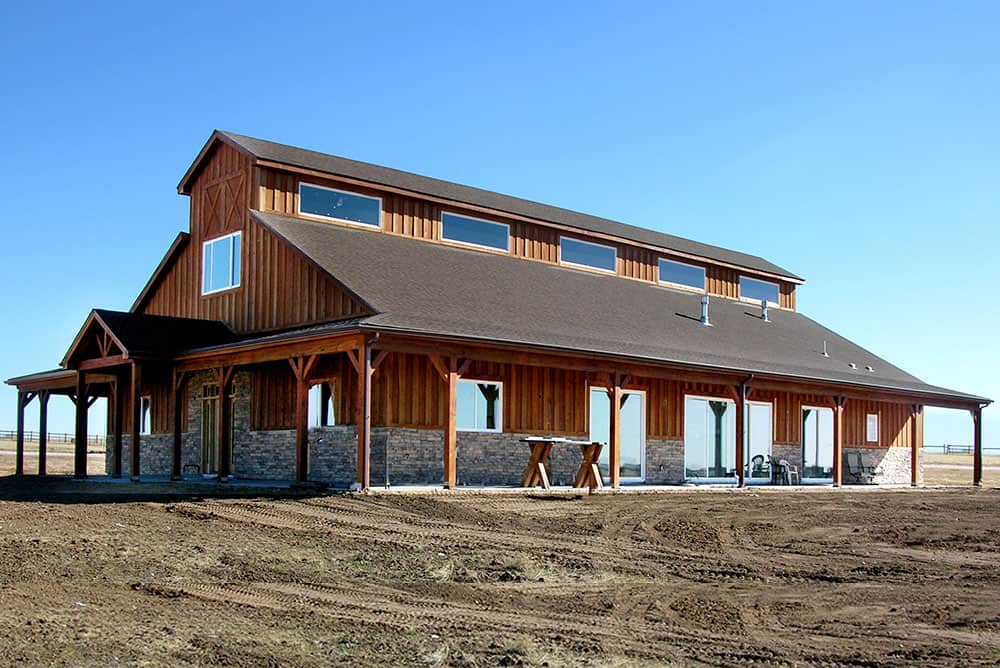
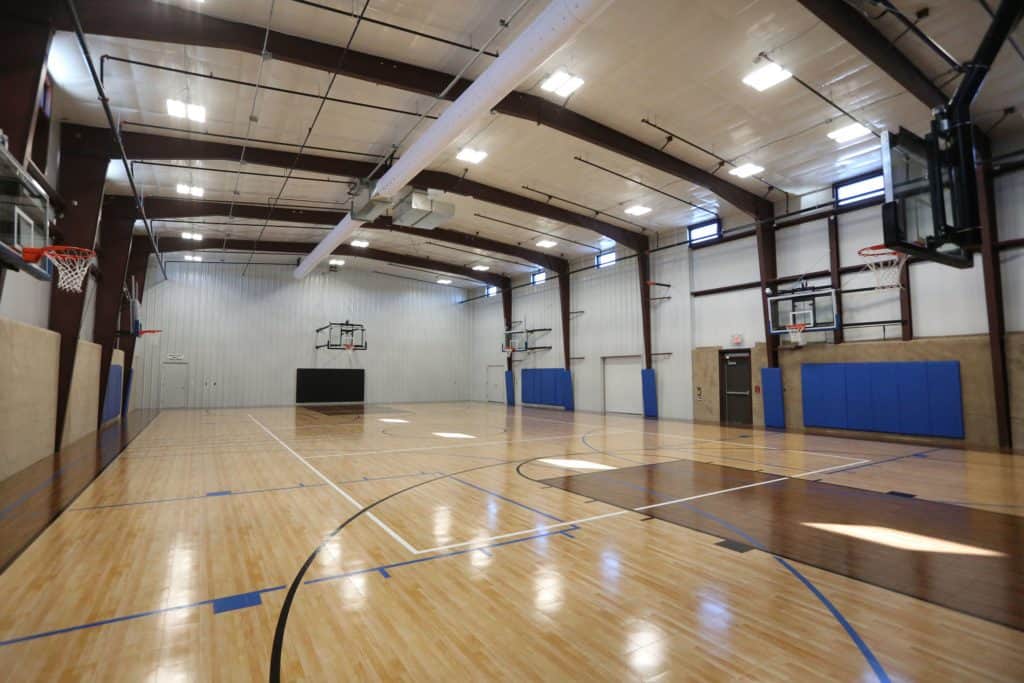
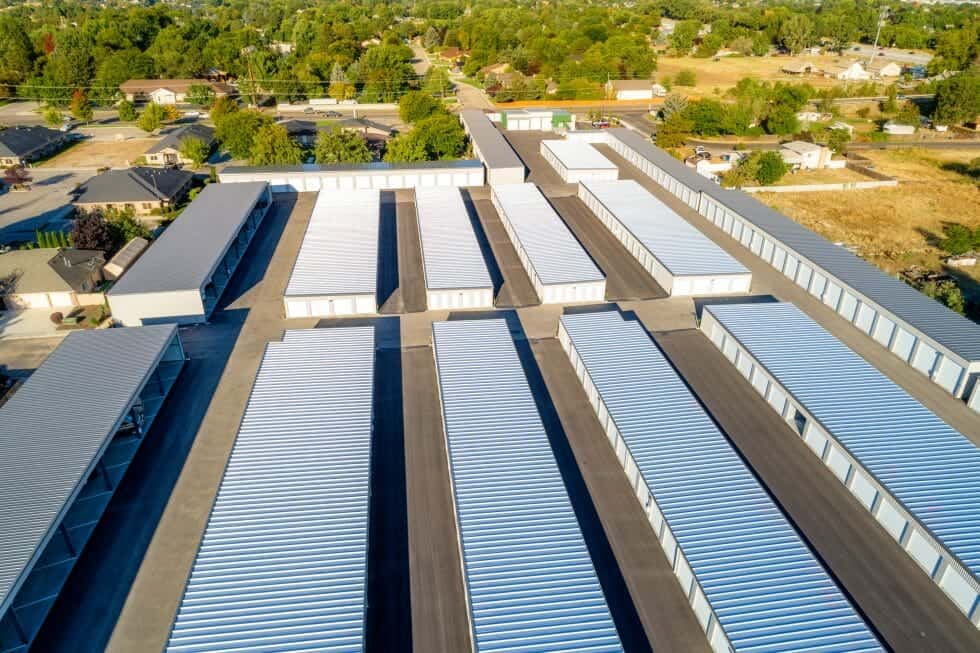
Farm and equipment storage, poultry and agricultural buildings, workshops, barndominiums, RV and boat storage, horse barns and riding arenas, aircraft hangars, light industrial and warehouse space, and indoor sports facilities.
The 40×60 is the most requested size in Georgia, as it is nationally — see 40×60 pricing or browse all sizes.
Frequently Asked Questions
Do I need a permit for a metal building in Georgia?
Permits are issued by your city or county, and enforcement is a local choice — some Georgia jurisdictions enforce all the mandatory codes, others only some. There is no statewide permit threshold at all, because Georgia deleted the administrative chapter from the adopted building code. Confirm with your specific county or city; no general rule covers the state.
If my county doesn’t require a permit, does the code still apply?
Yes. This is the most important thing on this page. The Department of Community Affairs states that any structure built in Georgia must comply with the state minimum codes whether or not the local government chooses to enforce them locally. No permit required is not no code required — buy engineered, sealed drawings regardless.
How much does a metal building cost in Georgia?
Kit-only runs $21,000–$24,700 for a 30×40 and $39,400–$46,300 for a 40×60. Turnkey in Georgia runs about 12% below the national average on the site-built portion — roughly $54,900–$64,400 for a 40×60 installed. The kit itself costs the same as anywhere; steel ships at a national price.
Which building code does Georgia use?
Since January 1, 2026: the 2024 IBC and 2024 IRC with 2026 Georgia Amendments, the 2024 plumbing, mechanical and fuel gas codes, and the 2023 NEC. The energy code is the exception — Georgia is still on the 2015 IECC with state amendments and has never moved off it.
Are farm buildings exempt from the building code in Georgia?
Far less than most people assume. The state exemption covers only farm structures designed by the USDA Natural Resources Conservation Service and used for manure storage, animal mortality composting or winter feeding. A general pole barn, hay barn or farm shop is not covered. Broader agricultural exemptions exist only as local ordinances and don’t apply outside that jurisdiction. A separate statute exempts agricultural buildings from contractor licensing, which is a different thing entirely.
What wind speed does my building need to be engineered for?
Georgia adopted no state wind map and no county table — the design speed comes from ASCE 7-22 by coordinates. Get the number from the building official reviewing your plans, or use the ASCE 7 Hazard Tool. Be careful with figures from older articles: ASCE 7-22 changed values from the previous edition in many regions.
Do I need a licensed contractor in Georgia?
Georgia licenses contractors through the State Licensing Board for Residential and General Contractors. For metal buildings the key detail is that the Residential-Light Commercial classification expressly covers pre-engineered steel buildings up to 50,000 sq ft. You can build for yourself under the owner-builder exemption if the structure is solely for you and your family and you supervise personally — but not if you sold a self-built structure in the previous 24 months.
Is a metal building tornado-proof?
No, and no code-compliant building of any material is. ASCE 7-22 does introduce tornado load provisions, but only for Risk Category III and IV buildings — schools, large assembly and emergency-response facilities. Ordinary shops, warehouses and homes are excluded.
How long does it take to build?
Kit fabrication and delivery typically run 6–12 weeks after engineering approval, with erection taking a few weeks more depending on size. Permitting time varies enormously by jurisdiction because Georgia sets no statewide procedure — some counties are quick, some are lengthy, and some have no process at all.
Get a Georgia Quote
Tell us your dimensions, eave height and county, and we’ll come back with wholesale pricing on a kit engineered and sealed for your site’s actual design loads — free, and no obligation.
Code editions, design criteria and permitting requirements change, and local adoption and amendments vary by jurisdiction. Verify current requirements with your authority having jurisdiction before finalizing a design. Last reviewed August 2026.
Get Your Free Quote
Answer a few quick questions and we’ll match you with suppliers who quote your exact size and location. Takes about two minutes.
14,068 kits sold • 50-year structural warranty • Free, no obligation
